
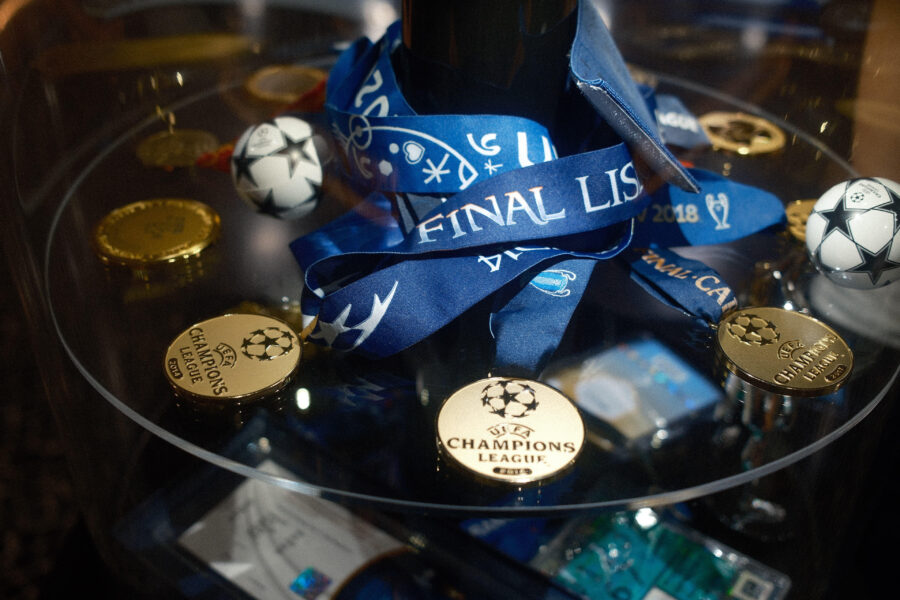
The introduction of a new League phase format in Europe’s most prestigious club competition hardly surprised the supporters from all ends of the continent. In an attempt to stave off the threat of a revival of the European Super League, UEFA’s executive committee unanimously introduced a new structure to the Champions League. According to the association, the expansion and restructuralization of the tournament aimed to “secure the positive future of European football at every level and meet the evolving needs of all its stakeholders”. So has it been a success? 6 months and 144 games later we are certainly in a position to draw some conclusions.
From the perspective of a supporter, the revamped Champions League significantly enhanced the overall quantity of entertaining group stage encounters. With two extra games added to the congested schedule and coupled with randomised fixture draws, the competition offered numerous high scoring encounters, often involving the powerhouses of European football. For instance, on matchday 3 we witnessed the encounter of last year’s finalist and another spectacular Real Madrid comeback (this time against Borrusia Dortmund), while matchday 7 unveiled a dramatic thriller at the Park de Prince with PSG coming from behind against Manchester City. These fixtures, as well as many others, saw an extremely high standard of games; one that we traditionally expect to see in the playoffs. Alternatively, the expanded format, provided the opportunity for numerous dark horses. In the early stages of the campaign, the European audience got acquainted with newcomers Brest and their counter-attacking football and later on, many were impressed by Lille and Feyenoord an their ability to upset the favourites. In addition, the unpredictability of results in the new format was clearly noticeable (something far less likely in a traditional group stage where the risk of elimination is higher), which added extra intrigue to each specific UCL fixture. Finally, the league phase format eliminated the practice of teams dropping down to the Europa League, which in turn enhanced the competitiveness of that tournament. No more third-place finishes and consequent Europa League triumphs, Sevilla FC!
That being said, the new format isn’t all good news, and its shortcomings quickly became apparent. By the end of the league phase, a staggering 144 games had been played—only to eliminate 12 of 36 teams. In reality, most of the so-called big teams comfortably advanced, making the extended group stage feel somewhat redundant. While some may argue that clubs like Manchester City or Juventus were at risk of an early exit, their struggles were self-inflicted, as they dropped points against so-called outsiders (Something that could have happened in the group stage too). Additionally, the uneven scheduling created a competitive imbalance. PSG, for example, faced a significantly tougher run of fixtures compared to other contenders, raising questions about fairness in the new system.
Player workload has reached an all-time high.
Another major concern is the relentless match congestion. With domestic leagues, cup competitions, frequent international breaks, an expanded Club World Cup, and now an even lengthier Champions League campaign, player workload has reached an all-time high. At a time when England scraps FA Cup replay and countries cancel domestic league cups to ease fixture congestion, UEFA has instead added more high-intensity games to an already packed calendar. The result? A continous increase in injuries, including dreaded ACL tears among some of the biggest teams in Europe, as players struggle to cope with the relentless schedule. Squad sizes may be large, but they are not limitless, and the strain on players has led to increasing discontent among managers and players with some even hinting at the possibility of a strike earlier in the season.
The final round was little more than a glorified friendly and frankly a meaningless fixture
The lack of rewards for strong performances is another flaw in the new system. Previously, teams that topped their groups were given a theoretically easier opponent in the knockout stages. Now, finishing first provides no such advantage. Liverpool, for instance, dominated the league phase only to be handed an in-form PSG side that could easily send them packing. Moreover, while past editions featured true “Groups of Death,” where multiple big clubs could be eliminated early (as seen with Milan, Dortmund and Newcastle last season), this format almost guarantees safe passage for the favourites, reducing the sense of jeopardy. For many clubs, the final round was little more than a glorified friendly and frankly a meaningless fixture, as their qualification fate had already been sealed.
Nevertheless, it must be said that despite the shortcomings, the knockout phase still promises the high-stakes drama we’ve come to associate with the Champions League. With all the tournament’s usual heavyweights present, we can still hope for unforgettable comebacks, nail-biting contests, and the unpredictability that makes this competition so special. And in a way, the revamped league phase has already provided its fair share of thrilling encounters along the way.
