


For as long as music has existed in Britain, it has been deployed as a vehicle for protest, channelling the anger of the masses against the elites, be that the king, aristocracy, government or corporation. In fact, England’s earliest existing rebel song, ‘Cutty Wren’ has been mythologised as the sound of the 1381’s peasant revolt.
In a more recent world, punk has offered an outlet for general unrest, with the likes of The Sex Pistols, Billy Bragg and Chumbawamba soundtracking the 70s to 90s. Such protest music arrived in waves, often in parallel with wider trade union movements of the miners, dockers and steelworkers, giving voice to existing sentiments of dissent, but not necessarily catalysing the protest itself.
In contrast, it would seem that this century has seen a marked recession in the prominence of British protest music, which has been attributed to a variety of factors. As a platform to broadcast dissent from, social media has trumped music on every practical level; it is easier and more accessible for both creator and consumer. Internet-led globalisation has also meant that national political discourse simply does not stream well, with pop lyrics overall tending towards a more inward and individual perspective. Alternatively, it can be read that musical statements have become less garishly outward, supplanted by more nuanced, subtle critique. This can be seen best in Stormzy’s 2019 Glastonbury set, charged with a frustration that is inferred through symbols and cryptic bars, not the rallying cries of the punk era.
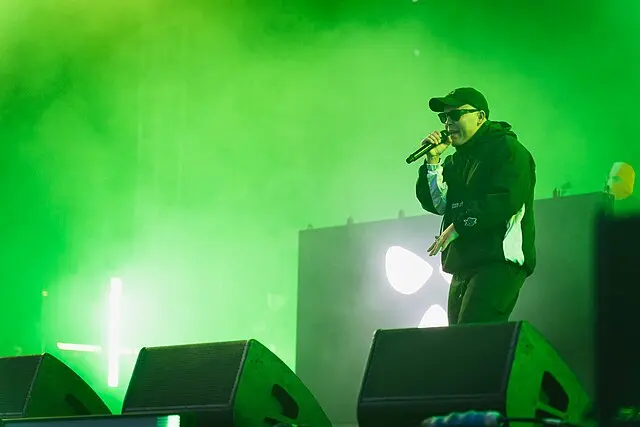
Of course, all of these elements go some way in explaining the gradual decline in full-blown protest music this century. But they can also tell us why it is back in 2025. This current phenomenon contrasts with any movements of the past in that it is rooted in the live performance, not the content of the music. As the UK government incrementally tightens restriction on public marches, through facial recognition and mass arrests, traditional demonstrations have become too unsafe for many young people. This has seen a new space open up: the likes of Kneecap, Fontaines DC, Massive Attack and Bob Vylan have all provided a safe setting for real protest at their gigs, accompanied by artist-led chants and dialogue. Festival and concert crowds have become sacred spaces, unpoliceable nodes for people to be active participants in a political act, in a way that simply cannot be achieved through a screen. At gigs, flag-wielding protesters can be part of something bigger, without risking future job prospects or a night in a cell.
The UK Government’s insistent legal attack on Kneecap proves the very power of this newly discovered arena for resistance. By attempting to make an example out of Mo Chara, they in fact reveal their own perceived vulnerability to the concert crowd. Here, we can additionally see protest music doing something it has not done in living memory: it is now the catalyst for wider demonstration, front and centre as the battlefield for change.
