


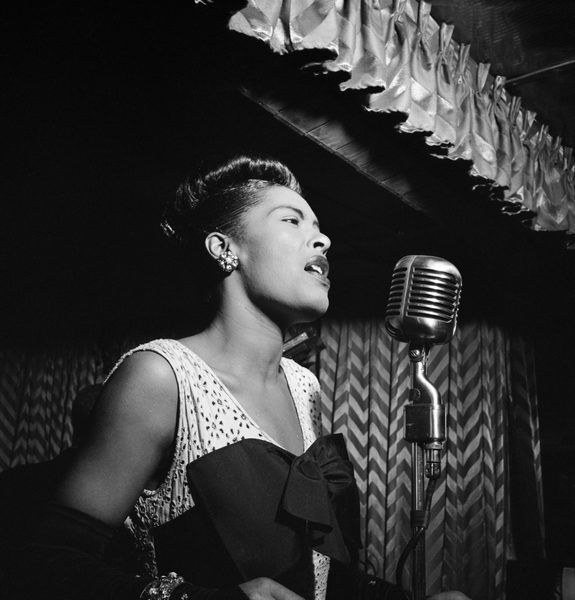
Fiercely honest, no-holds-barred, Billie Holiday’s timeless memoir is an unmitigatedly imperative read. Lady Sings the Blues tells the story of the incomparable Billie Holiday’s labyrinthine rise to fame, a legend in jazz, swing and standards singing; she stands steadfastly as an incontrovertible icon for the generations. She takes the reader on an incredibly fast-paced journey through her comeuppance and grimy Baltimore childhood, in which by age ten she was already running errands for the local whorehouse in exchange for listening to Louis Armstrong and Bessie Smith albums. These inspirations, as well as her elusive, adulterous father’s attempts at stardom and omnibenevolent mother, eventually coerced her emergence onto Harlem’s club scene. Her tumultuous struggles through grassroots, local venues eventually take all the way to sold-out performances with the Count Basie Orchestra. This revelatory memoir is full of glitz but is broodingly overwhelming in its trenchant observations of racism, which become a frustratingly monotonous theme within the novella.
It is incredibly affronting just how bad racial equality was in the 50s/60s; it categorically blocked and spurned Holiday at every turn, with racial vileness and odious speech oozing from every stranger, opportunity holder and supposed friend. IT is faultlessly impressive how she managed to keep going through years of violent oppression
The memoir is notable for its darkness and gloom, including in painful detail the tragic heroine’s addiction, which ultimately caused Holiday’s early demise. Antithetically, however, we are also shown, through mesmerising debuts such as “Strange Fruit”, her meetings with the biggest stars of the time: Bob Hope, Lana Turner, Clark Gable, Judy Garland and many more, that we see her glimmers of hope and raw success.
Her scrapes with Jim Crow, spats with the law and subsequent ignominious jailings and ultimate tragic decline are narrated through a tart, hip patois style, keeping the story suspenseful and fleeting but also making it read as if it were written just yesterday.
If you want a raw insight into one of the most tenacious, dogged women who has ever existed, I implore you to read this short autobiography.
