


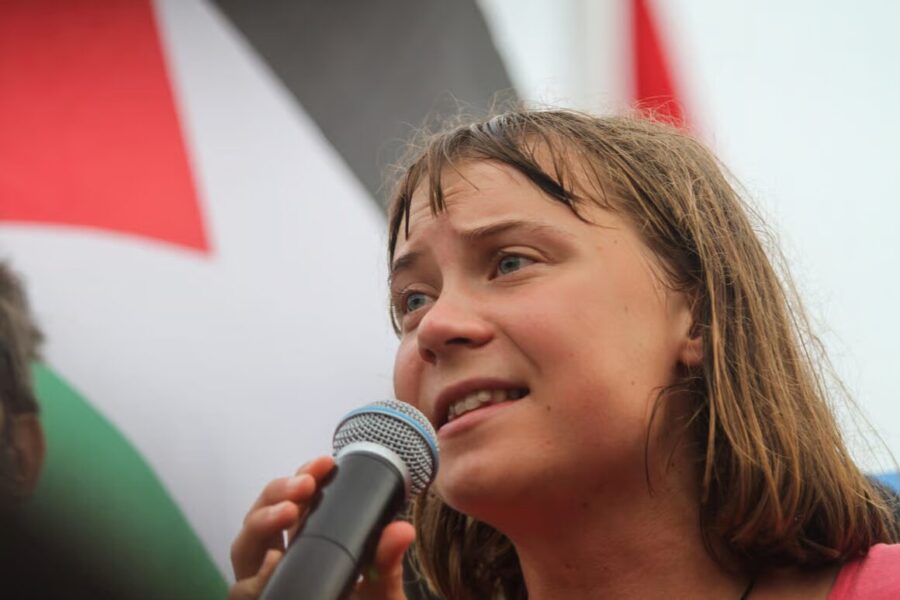
Greta Thunberg, Ada Colau, former mayor of Barcelona, and Rima Hassan, a member of the European parliament, were detained after the Gaza-bound aid flotilla, a part of the Global Sumud flotilla, was intercepted by Israeli forces. Between 1 to 3 October, 42 boats were intercepted and 462 people were kidnapped by Israeli forces. These events triggered protests across cities such as Rome, Buenos Aires, and Istanbul.
“This is a story of global international solidarity, of stepping up when our governments failed to do so.”
The Global Sumud flotilla is a coalition of organizers, humanitarians, doctors, artists, clergy, lawyers, and seafarers from around the world. Members come from countries including the UK, Italy, America, Malaysia, and others. The Global Sumud flotilla is one of the largest humanitarian flotillas ever to attempt to break the Israeli blockade of Gaza, which has been in place since 2007.
The Global Sumud flotilla is a promising example of international solidarity, with people from various countries and professions uniting to assist Gaza. Greta Thunberg stated this is “a story of global international solidarity, of people stepping up when our governments failed to do so.” Her statement highlights that international organisations like the United Nations are struggling to prevent conflict or enforce accountability; the responsibility then falls to nongovernmental groups. These organisations act where official bodies have not, aiming to deliver humanitarian aid and emphasising global commitment to Gaza despite the ongoing blockade.
The commitment and organisation required by non-governmental groups to pursue their goal is immense. Unlike governments, these organisations often lack funding, resources, and political leverage, making their mission in challenging humanitarian crises like the genocide Gaza blockade even more daunting. The confrontation becomes a struggle between non-governmental organisations and state power. The Global Sumud flotilla’s interception only acts as another display of the activists’ determination to deliver humanitarian aid to Gaza. Their actions resonate as a powerful statement of solidarity.
The genocide in Gaza has proven that international solidarity is strong amongst non-governmental organisations as they do what many international governments failed to do: breaking barriers, enduring torture and grim captivity conditions, and risking their lives just to provide humanitarian aid to Gaza.
