

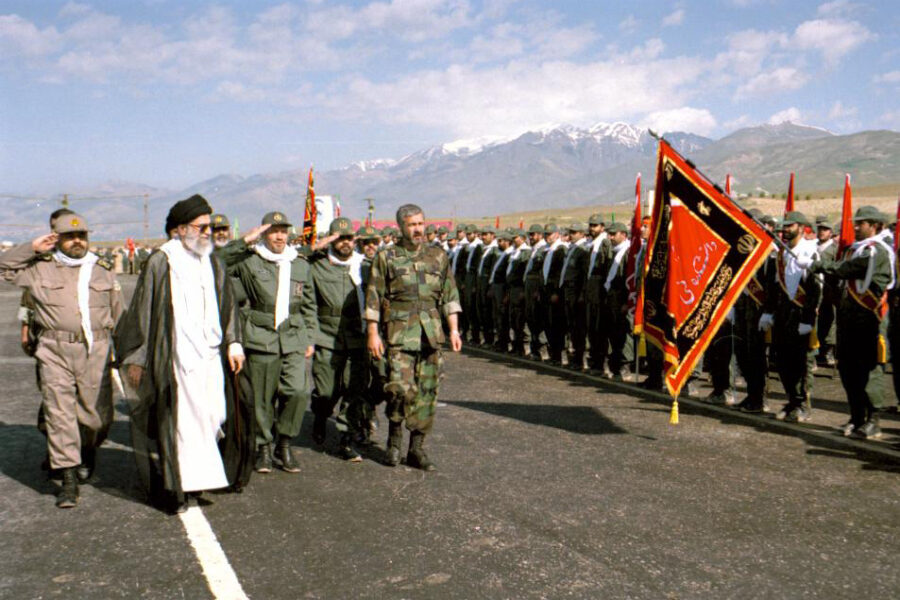
Iran has been struck by violent protests against its authoritarian leadership since late December 2025, experiencing its worst unrest since 2009. These protests have been primarily driven by sharp depreciation of the Iranian Rial and soaring inflation rates. As protests are being brutally crushed by the Iranian Revolutionary Guard (IRG), independent news sources report the death toll could be as high as 30,000 as of 25th January 2026.
Iran is no stranger to mass social upheaval and has historically been prone to outbreaks of anti-government demonstrations. The past century has been marked by patterns of cyclical, violent struggle against autocratic rule, with major protests spanning from the late 1800s to the present day.
Though efforts in the 21th century have so far been unsuccessful in producing democratic systemic change, Iran has previously seen structural victories, experiencing two successful regime changes in the last century – the 1905-1911 Iranian Constitutional Revolution and the 1979 Islamic Revolution. But what has contributed to the successes of these uprisings?
Iran is no stranger to mass social upheaval and has historically been prone to outbreaks of anti-government demonstrations.
The Constitutional Revolution stemmed from late 19th century movements fuelled by deep-seated discontent over the Qajar dynasty’s dictatorial rule. This uprising saw the formation of a strong coalition of the bazaar merchants, the clergy and democratic, Western-educated intellectuals. This alliance, combined with rapid communication between revolutionary centres, as well as a strong opposition in the face of a fragile and financially desperate monarch laid the foundations for change. The regime’s source of strength was eroded and hindered the government’s ability to crackdown on protests, facilitating a successful regime shift and the establishment of a Parliament.
Some decades later, the Revolution of 1979 was unmatched in its scale and enduring impact. The success of the movement rested on its diverse coalition of forces, including secular, liberal and clerical elites. A strong opposition leader, Ruhollah Khomeini, as well as the fragmentation of the Iranian military forces, which declared themselves ‘neutral’, refusing to support the regime, were crucial in sustaining the uprising. This massive rebellion resulted in the toppling of the 2500-year-old Pahlavi dynasty which was replaced by a theocratic regime – the Islamic Republic.
By contrast to 20th century successes, major movements of the last twenty years, namely The 2009 Iranian Green Movement, the 2022-2023 Mahsa Amini Protests, and recent unrest, have ended in failure. These have lacked the precise interplay of factors necessary to stimulate change to Iran’s political regime.
By contrast to 20th century successes, major movements of the last twenty years have ended in failure.
So which factors are key in causing regime change? Arguably, the most important are: participation from all layers of society; a fragmented security apparatus; a strong and organised opposition against a declining government; as well as clear and reliable communication networks.
As such, Iran currently seems unlikely to be at the very brink of a democratic regime change. The demonstrations have not yet been able to win over the support of different social groups, being predominantly driven by merchants and university students. As described by Reza Aslan, the resistance needs to “extend beyond a middle class, urbanized youth movement.” The efforts require the mobilisation of labour workers from key industries such as oil, which is vital to cripple the economy. Structural change is also unlikely without some support from high-ranked political figures. Grassroots-level protesters need to be backed by ‘insiders’ in the elite. Fundamental change is also less likely without the breakdown of security forces, such as the IRG, who remain loyal.
The resistance needs to extend beyond a middle class, urbanized youth movement.
The current movement lacks a united opposition with enough political legitimacy to facilitate a cohesive transition and ensure long-term stability. In the modern, digital era, protestors have to find a way to overcome difficulties caused by the government shutdown of satellite communication, as social media becomes a crucial weapon in coordinating protests. The political future of Iran thus looks increasingly uncertain.
A spokesperson from Exeter Students’ Guild said, “The ongoing situation and protests in Iran may be a worrying and distressing time for members of our community. We want to acknowledge how this may be affecting Iranian students and others with families and friends in the region, particularly those here in the UK who may be feeling anxious about loved ones affected by the situation.
You don’t have to go through this alone. Support is available through the University’s Wellbeing andInternational Student teams, as well as the Guild’s Advice Service, PGR support, mitigation guidance and the Multifaith Chaplaincy. If you’re feeling overwhelmed or just need someone to talk to, please reach out. We’re here to listen.”
