


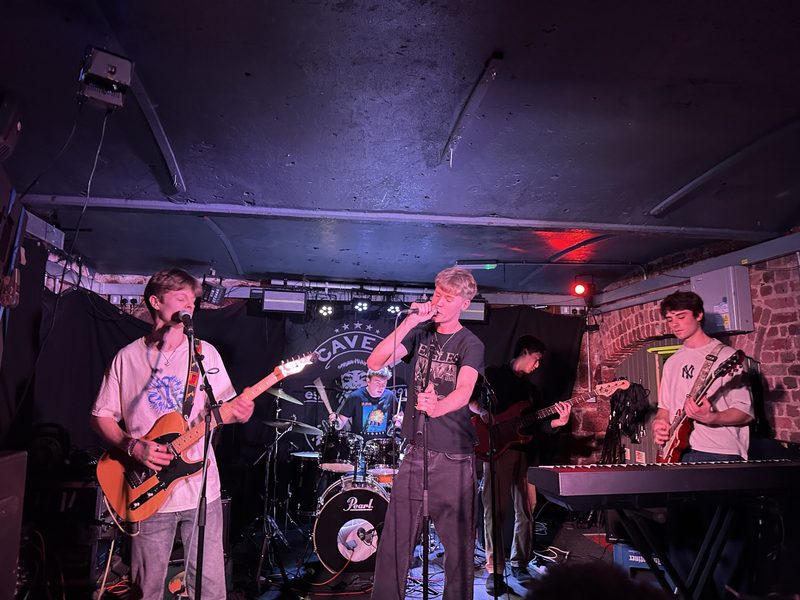
You don’t have to delve deep into the archives of Exeter’s music scene to find some names you are bound to recognise: Coldplay, Radiohead, Arctic Monkeys and Bob Marley, to name just a few. However lucky we were to host the likes of such music royalty, I cannot help but feel like it has become a pipe dream to attract the likes of these famous faces.
This could be attributed to the fact that these artists were not as well known when they played in Exeter. Radiohead for example played at The Lemon Grove in 1993, years before their resounding success of their album ‘OK Computer’ released in 1997. Coldplay performed at Cavern in 2000 as part of their ‘Parachutes’ tour, before the eponymous album won a Grammy Award. Perhaps then, Exeter has only appealed to musical artists and bands still in their infancy, looking to garner a fanbase wherever they may find themselves.
However, Arctic Monkeys played the Great Hall in 2007, a whole year after the release of their record-breaking debut album ‘Whatever People Say I Am, That’s What I’m Not.’ Similarly, Bob Marley gained international recognition with the release of ‘Catch A Fire’ in 1973 and went on to play the Great Hall in 1976. Admittedly, both of these artists were not necessarily at the peak of their fame when they played here but they were still recognisable names with a plethora of fans. This begs the question: why does Exeter have such a problem attracting musicians of this calibre now?
The answer to this question is partly founded in broader problems throughout the music industry; primarily, the economics of touring and accessibility. Research by the Music Venue Trust in 2024 demonstrates that acts play only 11 shows when touring smaller venues compared to the 22 shows on average they would play 30 years ago. This means huge amounts of the UK must travel to see artists perform live, or else miss out completely. For us in the Southwest, musicians seem to favour Bristol because they can play to more people in one night and turn over more profit to combat the ever-rising costs of touring.
Furthermore, the absence of a large-scale venue in Exeter’s city centre presents a further problem. Plans to create a multi-purpose 1,200 seated or 2,500 standing venue were scrapped by the council in 2020, favouring a refurbishment of the Exeter Corn Exchange instead which can host only 500 people. This lack of a purpose-built venue results in more limited accessibility for those musical artists who may attract a larger crowd, making a tour date in Exeter less profitable and consequently, less viable.
However, this does not prevent Exeter from being a hub of musical talent, you just have to look more carefully for it. Exeter’s small independent venues are quietly hosting a vast range of musicians and bands from all over the world. Speaking to Exeter Gig Society, they believe Exeter’s existing music scene forces you to support ‘more grassroots independent venues, smaller artists’ and ‘its very fun to find smaller, more niche artists.’ While they admit, ‘it’s true that we are a bit looped out’, they declare that ‘there’s still so much on offer.’ With their membership nearly reaching 200 in only its third year of existence, it is clear that their ethos and vision aligns with many others in the student community: ‘gig soc is about protecting and ensuring that grassroots music doesn’t die because ultimately those are the real places where music’s coming from.’
If you wish to involve yourself more in the local scene, they recommend keeping an eye on venues’ social media and websites, as the likes of Cavern, Artigiano, The Old Firehouse, Exeter Phoenix, Bomba, 12 Bar, Bootlegger, Topsham Brewery, Ludo and The Mermaid, all advertise their events. They also suggest following student societies like Campus Bands, Big Band, Latin Orchestra, Jazz Collective, and Soul Choir, given that students really bolster Exeter’s music scene. Or, obviously, you could join Gig Society, where they send out a list of all the musical events happening every week!
Although it’s evident that Exeter’s music scene has changed quite dramatically over time, it is by no means a lost cause or any less exciting. There are plenty of incredible grassroots venues and musicians that need our support more than ever, so perhaps it’s time you tried something new and attended a local gig; you never know what you might end up loving.
