


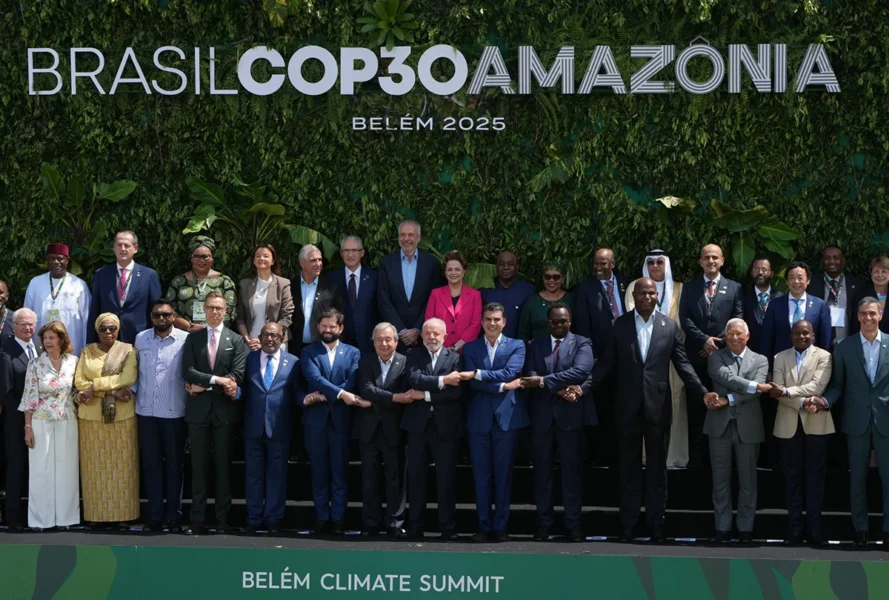
With COP30 underway, running from 10-21 November, delegates from global giants and small nations are expected to discuss how to reach the climate goals of restricting the rise in global temperatures. COP30 is the 30th annual UN climate meeting, following the original UN climate agreement of 1992. This year is particularly important as the 10 year anniversary of the Paris Climate Agreement, in which countries pledged to limit the rise in global temperatures to 1.5 °C.
This year is particularly important as the 10 year anniversary of the Paris Climate Agreement
Since COP29, richer countries have promised to raise their funds to a record $300bn (£238bn) a year to help poorer countries fight climate change. In COP30, a main point of discussion is climate financing, after poorer countries condemned this deal as far less than they need, while they face the brunt of climate change. Although given the steady decline in leaders who have registered to attend, from more than 150 in Dubai for COP28 to fewer than 60 for COP30, progress in climate financing may be challenging.
This year’s COP30 faces a challenge with the Trump administration, as the US President has been the outlier on climate issues, with his pledge to boost oil and gas drilling, saying ‘drill, baby, drill’, and withdrawing from the Paris Agreement. This position makes it more difficult to reach a consensus, as we have seen at earlier UN negotiations to develop a treaty to end plastic pollution that have hit a stalemate. Currently, the US is absent from talks, while China’s outstanding progress on clean energy will be on everyone’s minds. PM Sir Keir Starmer and Prince William will be attending the summit, to restore the UK as “a global leader for climate action and green growth”, also stressing in his speech to the UN that exciting economic opportunities exist in a green transition.
Some controversy has surrounded the conference’s location in the Amazon rainforest. As the largest tropical forest in the world, the Amazon faces significant global warming issues, making it a symbolic and strategic location for Brazil to highlight the importance of protecting its greenery. However, the rainforest city of Belem has faced inequality, with most of its 2.5 million residents living in slums. There have been issues surrounding a lack of accommodation, with NGOs, media organisations and charities raising concerns that they may not be able to participate in the conference if the issue of sky-high prices and lack the infrastructure persists. This led to emergency UN meeting talks on accommodation, along with government investment of $1 billion (£751 million) into building new hotels, refurbishing old ones, and improving roads.
(The Amazon is) a symbolic and strategic location for Brazil to highlight the importance of protecting its greenery.
Despite its challenges, COP30 remains an important moment for global climate talks. Ten years after the Paris Agreement, the focus has shifted from promises to delivery, with climate finance and global cooperation still at the forefront. With fewer world leaders attending and political divides widening, the summit will test how committed countries truly are to turning pledges into action. Ultimately, COP30 will reveal whether global leaders are ready to move beyond negotiations and toward action, with the world watching closely to see what comes next.