


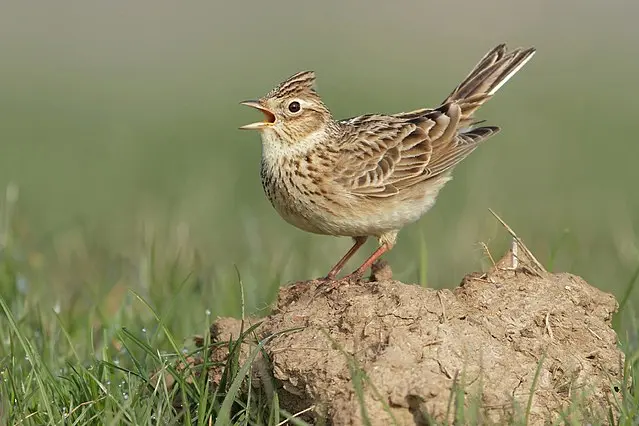
Modest at a glance, the Skylark rewards a second look. Roughly the size of a starling but closer in build to a sparrow, it is streaked warm-brown above with a paler, lightly streaked breast; camouflage so effective it seems to dissolve into a ploughed field. A short, erectile crest is the giveaway. Raised in moments of excitement or alarm, it lends the bird a faintly ruffled, alert expression. In flight, a white trailing edge to the wing and white outer tail feathers flash briefly before it vanishes back into the grass.
No bird captures the feeling of an open March morning quite like the Skylark. As temperatures creep upwards, males ascend almost vertically — sometimes to 300 metres — and then simply hang there, pouring out a continuous, liquid cascade of trills and warbles that can last several minutes without pause. Keats called it a “blithe spirit”; Vaughan Williams built a concerto around it. The song is not merely beautiful — it is functional. A male that can sustain his aerial aria longest signals to watching females below that he is fit, vigorous, and worth choosing. Rival males may ascend nearby, turning the sky into a concert hall of competing tenors. Listen to the Skylark’s song here on the RSPB’s page.
No bird captures the feeling of an open March morning quite like the Skylark.
Skylarks are widespread across the UK, favouring open farmland, heathland, coastal grassland, and upland moor — anywhere with low, tussocky cover for nesting and clear lines of sight for predator-spotting. In winter, birds from Scandinavia and northern Europe swell local numbers. Good spots to see (and hear) them include the chalk downlands of Winterbourne Downs, the saltmarshes of RSPB Dee Estuary at Parkgate, and the rugged hills of Aghatirourke in Northern Ireland. For a broader view of where to look, the RSPB reserve finder lists many sites where skylarks have been recorded.
For all its lyrical fame, the skylark is in serious trouble. It sits on the UK Red List, the highest conservation priority, following a population crash of over 50% since the 1970s, driven largely by changes in agricultural practice. The shift to autumn that sees sown cereal crops remove the short, open sward skylarks need, means nests are now frequently destroyed before chicks can fledge. Measures such as “skylark plots” — small, undrilled patches left within cereal fields — have shown real promise, and some farmland bird schemes are beginning to stabilise numbers in targeted areas. If you hear that spiralling song above a field this March, consider it a small, hard-won miracle.
