


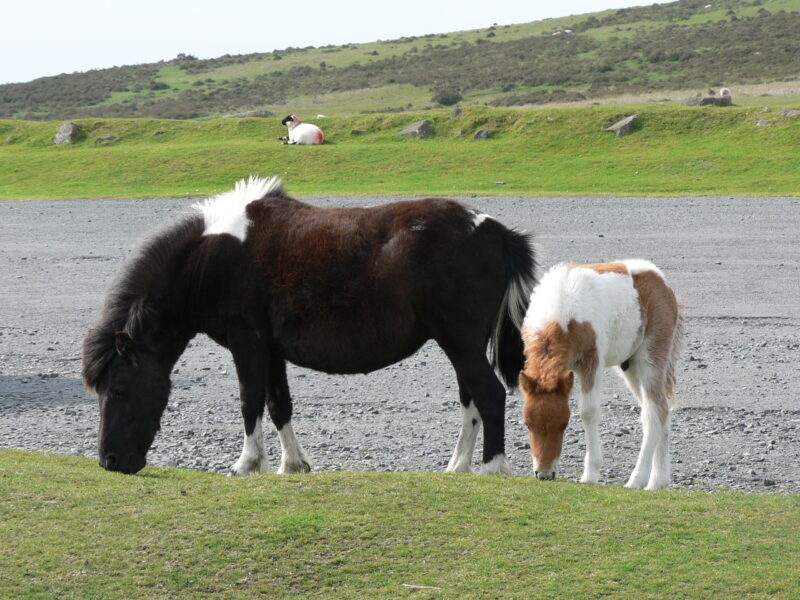
You pull into a car park Dartmoor. You see a pony. You have a carrot. Surely giving it a snack can’t hurt? Unfortunately, you’d be wrong. The Dartmoor Livestock Protection Society and local police are warning that this seemingly kind gesture can actually put ponies in danger.
Who are the Dartmoor Ponies?
Dartmoor ponies are an important part of the moor’s landscape. Around 900–1,500 ponies graze across Dartmoor, including the Dartmoor Hill Pony the recognised Dartmoor Pony breed. Although they roam freely across the moor, they are not truly wild: they are owned by farmers. Ponies have been roaming Dartmoor for at least 4,000 years, and their grazing plays an important role in maintaining habitats and supporting wildlife.
What is the problem with feeding them? Visitors may offer ponies carrots, apples or even parts of their lunch, like ham sandwiches! However, unsuitable food can cause choking or upset the ponies’ sensitive digestive systems. This can lead to colic, a painful abdominal condition that can be extremely serious and potentially fatal.
Feeding also encourages the ponies to associate people and car parks with food. As a result, they may gather around vehicles and roads, increasing the risk of being hit by a car and posing a danger for drivers and passengers. The Dartmoor Livestock Protection Society also warns that ponies can be unpredictable, with the potential to bite or kick without warning.
Importantly, feeding Dartmoor’s ponies is prohibited under Dartmoor National Park Byelaw 10(1).
Local police have also warned that people could potentially face action under the Animal Welfare Act in relation to causing “unnecessary suffering” to the ponies.
So what can I do?
The best way to care for Dartmoor’s ponies is sometimes to do nothing at all. They don’t need us to feed them. They’ve survived on the moor for thousands of years with natural grazing.
Instead:
· Take all litter and food waste home with you – swallowing rubbish is very dangerous for all livestock.
· If you are driving observe the speed limit, 40mph on many of Dartmoor’s roads, and park in designated car parks rather than on a verge to avoid attracting ponies to the roadside.
· If you see a pony that’s injured or showing signs of distress, contact Dartmoor’s Livestock Protection Officer.
