



Britain’s graduate job market is becoming tougher. Graduate vacancies fell 45% in the first seven months of 2026, according to jobs website Adzuna. Higher costs and growing use of AI have reduced demand for roles traditionally filled by recent graduates.
In July, graduate vacancies fell to their lowest level since they began tracking them 2016. Competition for graduate jobs hit a record of 140 applications per role, according to the Institute of Student Employers.
Andrew Hunter, co- founder of Adzuna, said: ‘July’s numbers are a step backwards, not a blip.’
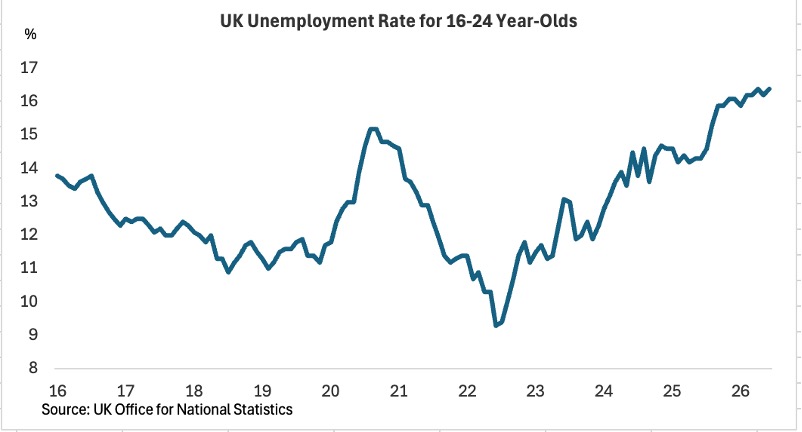
The decline comes amid wider concerns about youth employment. The unemployment rate of 16 to 24-year-olds has risen sharply since the second quarter of 2022, reaching 16% for the May to July 2026 period compared to 4.9% for the broader population, according to the UK Office for National Statistics.
Higher employer National Insurance contributions and minimum wage costs have increased the cost of entry level hiring, adding pressure to employers’ recruitment budgets.
A labour market facing higher employment costs is also seeing entry- level roles reshaped by AI. According to the Institute of Student Employers (ISE), 54% of employers are concerned about the impact of AI and automation on new hires, while 87% expect graduate and apprentice roles to be reshaped by AI.
Employers expect basic tasks such as routine administrative, data and writing tasks to become more automated, as AI takes on these roles.
Graduate vacancies fell by 45% in the first seven months of 2026
Yet, some smaller companies have had the opposite experience. Universities UK did a survey in June that found that 47% of UK employers with vacancies find it difficult to fill graduate or equivalent level roles.
For example, sector body Make UK estimates in manufacturing, there are over 50,000 vacancies, more than a third of which are hard to fill due to skills shortages.
Ian Goodacre, technical director at Essex- based medical device manufacturer Europlaz says, ‘I am not convinced people are being told about companies like us.’
‘But when we put adverts out, it’s surprising how few graduates we get applying.’
The company made several good graduate hires this year but had to work hard to find them, reaching out directly to students.
For those leaving university, the challenge is no longer simply finding a job, but navigating an increasingly uncertain and competitive landscape. How employers adapt to these pressures- and how universities prepare students for them- will help determine whether a degree remains a reliable route into work.
