

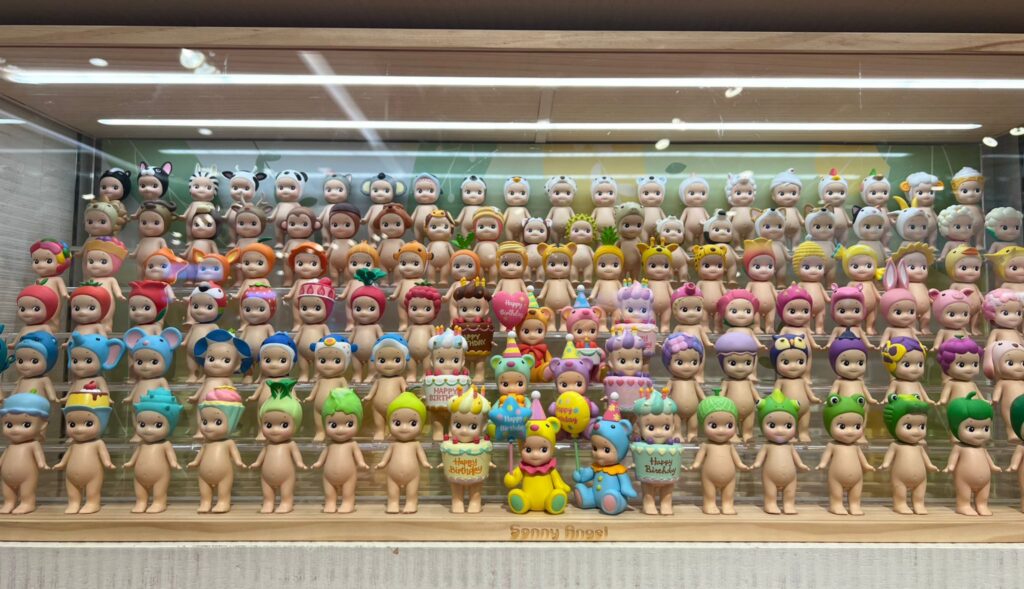
Unless you’ve been living under a rock, you’ve probably spotted them, dangling off tote bags, backpacks and designer handbags alike. Whether it’s a Labubus, Jellycats, Smiskis, Sonny Angel, Miffy, or Sanrio character, it feels like everyone (and their dog) has a trinket to show off. But this trend isn’t new. It stretches back to the early 2000s, long before Labubus entered the scene. One of the most notable precursors? Fendi’s Bag Bugs, a high-fashion phenomenon once championed by the Kardashians. With their playful monster faces and luxe textures, they blended whimsy with wealth, reshaping the idea of a “classy” accessory.
Why are Gen Z, arguably the most cash-strapped generation in decades, so obsessed with these “frivolous” collectables and trinkets? Perhaps it is a reflection of the economic state of our country.
Now, we’re in the era of “Jane Birkinifying”, a term coined from the fashion icon’s famously overstuffed Hermès Birkin, decorated with scarves, charms, and sentimental objects. Think maximalist accessorising with a deeply personal twist: your bag becomes your diary. But beneath the cuteness and colour, there’s something deeper going on. Why are Gen Z, arguably the most cash-strapped generation in decades, so obsessed with these “frivolous” collectables and trinkets? Perhaps it is a reflection of the economic state of our country.
One explanation? The Lipstick Effect, a well-documented trend where, during times of economic hardship, people turn to small indulgences to maintain a sense of control. While home ownership and car buying feel increasingly out of reach, a £15 keychain offers a hit of joy, identity, and cultural participation. And this isn’t just a passing phase. The UK’s “kidult” market, adults buying toys and games traditionally aimed at children, is now worth over £1 billion, with one in every three pounds spent on toys coming from adults, according to analysts at Circana.
Beyond aesthetics, there’s something deeper driving trinket culture: comfort and control. In an increasingly chaotic world, these little plushies and charms offer something familiar, even soothing. Nostalgia has become a form of self-care, with many turning to childlike items to escape the constant pressure of adult life. On TikTok and Instagram, creators talk about their collections as a way to “reconnect with their inner child” or to create pockets of joy in stressful environments. But there’s also a darker side. The rise of “treat culture”, where every purchase is justified as a reward, can easily tip into overconsumption. A £12 charm feels like a tiny indulgence, but when it becomes a habit, it’s easy to lose track of how much you’re spending just to feel something. We’re told that happiness is one impulse-buy away, but sometimes, buying more just leaves us wanting more.
And it’s not always cute. Recently, Pop Mart, the company behind Labubu, paused sales to “prevent any potential safety issues” after customers began fighting over them in-store. Yes, actual fights. Over keyrings. It makes you wonder: have we taken this too far?
As someone who genuinely loves this trend, I’ll admit, I’m torn. I love the creativity and individuality that bag charms can express. But I can’t ignore the overconsumption that’s taking over TikTok, where hauls feature countless random, meaningless trinkets, bought more for clout than connection. It starts to feel less like personal expression and more like performative shopping. And what happens when the hype dies down? Discarded plushies, mountains of microplastics, and the sad reality that these once-precious charms might be dumped in a drawer, or worse, the bin.
We’ve seen it before. Remember Fendi’s Bag Bugs? Once at the top of the fashion pyramid, now quietly forgotten, a lowly commoner, except by true fashion lovers.
But it’s not all hollow consumption. I run a trinket-themed Instagram myself, and what keeps me coming back isn’t just the figurines; it’s the community. People share tips, swaps, memes and stories behind their favourites. I have a few friends I made bonds with over our favourite collection or where to hunt for our favourite monkey keychains. It’s a surprisingly wholesome space where creativity thrives. For many, this is an entry-level hobby that doesn’t require intense skill or a huge time commitment, just an eye for what makes you smile. And in a world that often demands productivity over play, maybe that’s why it resonates. When done meaningfully, collecting trinkets can be a small, joyful act of self-expression and connection.
If this trend is going to have staying power, it needs to shift. Trinket culture should be about curating, not just consuming. Your bag shouldn’t look like the gift shop at an anime convention; it should reflect you and your experiences. A childhood souvenir, a charm passed down by a friend, a memento from a summer abroad. Something that means something.
In a world where everything feels increasingly disposable, maybe our accessories shouldn’t be.