


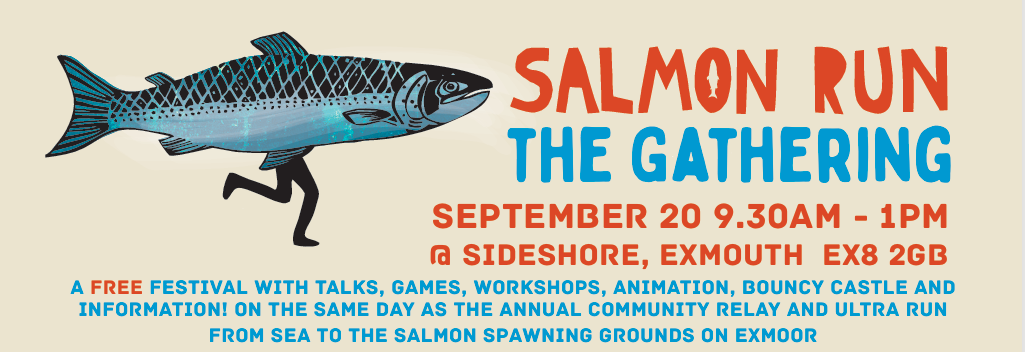
Since 2022, Tidelines have gathered the East Devon community to the Salmon Run, the yearly marathon and relay from Exmouth to Dulverton. As salmon ready to spawn head upstream, so do the participants, following the journey of this critically endangered species. To the locals, however, the plummeting numbers of salmon – down 75% since the 1970s – is about the environmental impact as much as the cultural.
With its choice of ultra-marathon and relay, the Salmon Run gets runners of all abilities involved. “We value inclusivity and community more than numbers,” emphasises organiser Anne-Marie, which is why participants range from school children and scouts to athletes and first-time runners. Unlike bigger marathon events, this run is organised in small groups – or fittingly-named ‘shoals’ – of people with similar abilities. Though numbers range every year, the total number of runners next week will be around 400.
Keen to give everyone a place, participants aren’t just limited to running. At the Salmon Run, music, games and costumes animate different checkpoints along the way. Between cultural performances and an inspirational talk by Olympics athlete Ettiene Stott, one artist to look out for is Jenni Dutton, who has created a costume using pharmaceutical capsules. This plastic item is what makes some of the rivers in Exmoor the most polluted in the country.
Another attraction for participants is the crossover between sports and nature. “There are many people in the sporting world that are conscious about the climate crisis,” Anne-Marie explains, highlighting local groups such as Green Runners. This rings true for University of Exeter student and athlete, Innes Fitzgerald, who ran in the Salmon Run last year and has grown up connected to her Devon environment doing cross country. “It’s important to have these events that aren’t just about the running,” Innes describes, “there’s no pressure or expectations, it’s about doing it together.”
This sense of community enforces a connection to place. “Rituals and community events are geared around patterns in nature, like salmon migrating or the arrival of swifts,” says Anne-Marie, “spotting these changes help us connect to our landscape.” In fact, the motif of salmon has been weaving its way into local rituals for years, from folklore to Nello’s Longest Table, the yearly Topsham food festival which nods to the area’s fishing heritage on plates dotted around some 450 tables.
By connecting over something the community cares about through movement, the run becomes ritual in nature.
The Salmon Run 2025 is on Saturday 20th September. The nearest checkpoint in Exeter will be the Quay.
Here is the full promotional poster for the event – salmon run gathering flyer.pdf
