


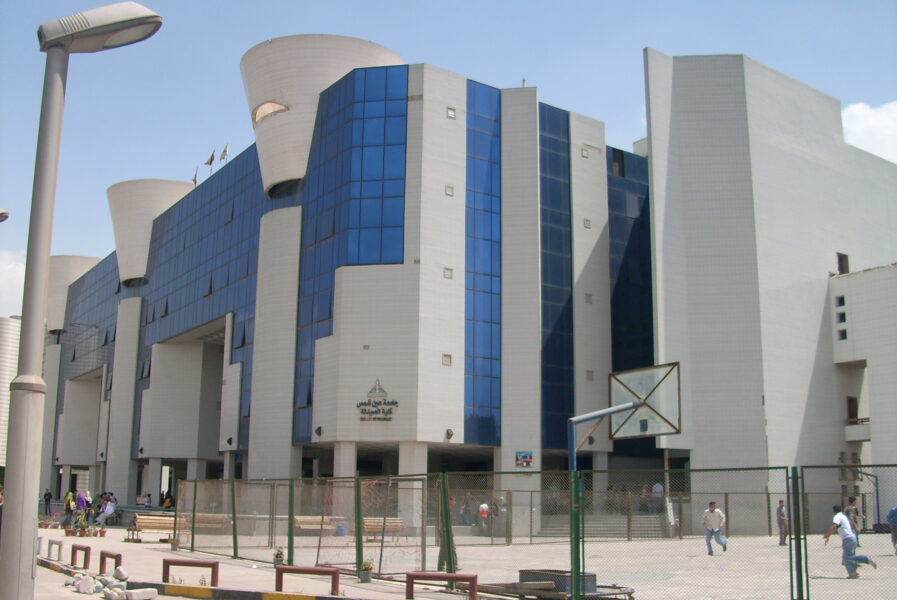
Universities across the UK have increasingly followed the trend of establishing international branches of their campuses. Jamie Arrowsmith, Director of Universities UK International, states that UK Transnational Education (TNE) is growing in significance due to its role in maintaining the world-leading position of UK universities, as well as enhancing the overall quality of education. This refers most accurately to the delivery of UK education worldwide through online / distance learning, or from branching out UK campuses globally. Following the signed agreement in January 2025, the University of Exeter will now be following this programme, opening a branch in Cairo in partnership with Ain Shams University.
The University of Exeter will be following in the footsteps of other UK universities that have expanded overseas, such as Newcastle University, which has campuses in Malaysia and Singapore, and the University of Liverpool, which has a campus in China. This is representative of what Professor Chris Day calls “a well-established and credible physical presence all around the world, overseas campuses make an extraordinary contribution to accelerating the development of higher education systems in key areas as well as generating significant economic and reputational value for the UK.” This clearly highlights the correlation between the TNE and the UK government’s ambition to drive exports and promote the quality of UK higher education.
The University of Exeter will be following in the footsteps of other UK universities that have expanded overseas…
The ambitious development of overseas branches has been occurring since November 2021, with Newcastle University and the University of Nottingham blazing the trail. Labelling themselves, as well as many other universities expanding their branches, the UK University Overseas Campus Network. This network of universities has proven to take pride in their advocacy for international student mobility, environmental sustainability, international recognition of qualifications, the impact of digital technology worldwide, research and knowledge exchange, and lobbying and positioning. Exeter will be the newest university to join their trend towards innovation and the UK’s goal of becoming an educational superpower.
Whilst some universities targeted the idea of building international relationships, such as the University of Birmingham utilising their Dubai campus to build a community and heighten student engagement, other universities branched out to strengthen their research; the University of Glasgow created strategic partnerships with science and technology institutes in both China and Singapore to develop a better understanding of the sciences globally, placing specific research into areas of study such as Electrical Engineering and Aerospace.
Exeter’s motivation for their development in Egypt, making them the first Russell Group university to open a branch in Africa, has been viewed to enhance academic collaboration, expand access to world-class education, and address critical global challenges. This partnership was facilitated as a part of the TNE programme and will benefit Exeter students in both Devon and Cairo by exploring new opportunities for enhanced global research, exchange programmes, and improved study abroad and industry experience opportunities. Furthermore, the collaboration ensures that degrees will become internationally accredited, particularly improving the career opportunities for young people in Egypt, who will now have access to leading educational and research opportunities.
Exeter’s motivation for their development in Egypt… has been viewed to enhance academic collaboration, expand access to world-class education, and address critical global challenges.
The university has claimed that the main advantages of this ‘pioneering branch’ will be: developing research that focuses on urgent global challenges; exchange programmes for both faculty and students to enrich academic experience; equipping graduates with the skills needed to meet the demands of the modern employment markets; strengthened cultural collaboration and its well-known that having a University of Exeter degree is worth having over most other degrees. Exeter is 10th for ‘Universities Targeted By Top Employers’ and the 7th best university in the UK with a TEF gold ranking, proving that graduates are well-taught, skilled, and passionate about their discipline. Having a degree that holds such merit, from a school that is dedicated to creating a top branch campus, could be truly beneficial to young Egyptians who are currently suffering from receiving an education that isn’t well-respected, given the current educational scandals. The Middle East Monitor has reported that cheating scandals are threatening the reputation of Egyptian qualifications, thus making access to a degree from Exeter career-changing.
Having a degree that holds such merit… could be truly beneficial to young Egyptians who are currently suffering from receiving an education that isn’t well-respected…
On the other hand, there are significant implications and drawbacks to an international campus, particularly studying there as a student. One of the main disadvantages of the Cairo campus would be that students don’t get the full ‘experience’. Even though students in Egypt may be an Exeter student, it could be argued that students in the original England campus are the only ones that receive the real treatment of a student (i.e., attending major sporting events, being around the famous architecture), meaning that Egyptian students (or students who choose to travel to Egypt for study) will receive the academic benefits, but not receive the student lifestyle that Exeter has a reputation for. Furthermore, there have been examples of branch campuses not matching the same quality as the original. In 2007, the Singapore branch of the University of New South Wales closed after less than a year due to undersubscription, and most universities find it difficult to persuade their high-quality teaching and research faculty to relocate to branch campuses, often leading to the parent campus retaining a high quality whilst the branch withers.
One of the main disadvantages of the Cairo campus would be that students don’t get the full ‘experience’.
In conclusion, the University of Exeter’s decision to open a campus in Cairo represents both an exciting opportunity and a significant challenge. It reflects the growing importance of transnational education in strengthening global partnerships and widening access to high-quality degrees. For many students, this development could open doors to international accreditation, enhanced career prospects, and valuable cultural exchange. However, questions remain about whether a branch campus can truly offer the same experience and academic standard as the original. As Exeter embarks on this new chapter, its success will depend on maintaining the quality, reputation, and community that define the university, while adapting to the unique educational landscape of Egypt.
