
When you think of salmon, I’m sure your mind goes to the food – salmon bowls, sushi, that sort of thing – but how often do you think about the animal itself? Atlantic Salmon, the species you can find across the UK, are (you’ve guessed it) part of the salmon family. They are also known by their scientific name: Salmo Salar. While salmon range between many sizes, they can grow to 1.5m, 40kg and live up for 13 years. Their diets consist of insects, plankton and eventually smaller fish.
Atlantic salmon are found in the northern Atlantic Ocean and the rivers that flow into it. In Britain, they are found in the cleanest rivers in Scotland, Wales and North and South-West England. Atlantic salmon are anadromous, which means that they hatch in streams and rivers and live there during their youth (generally for a couple of years), but move into the ocean as they mature. Eventually they travel back upstream to breed.
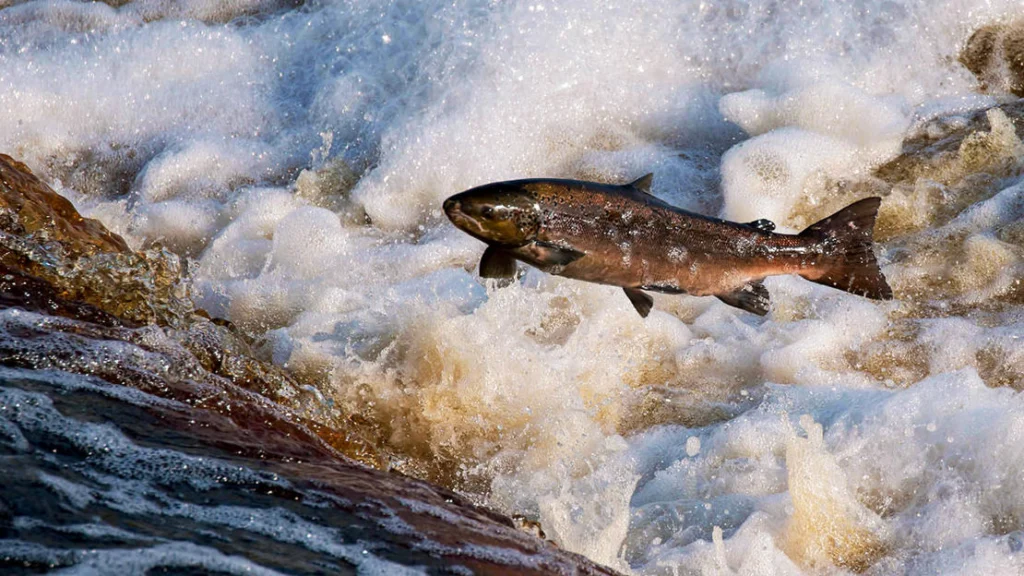
Watching salmon travel upstream can be an amazing spectacle. They can leap out of the water to jump over obstacles in their path. Records have seen salmon jumping up to twelve feet in the air. Once they make it back upstream, females lay eggs and the males deposit sperm to fertilise them. The fish die soon after breeding. If you want to watch the salmon migrate, the best times to do so are between October and November.
Records have seen salmon jumping up to twelve feet in the air.
However, salmon have now been categorised as under threat. Populations of the fish are dropping due to factors such as water pollution, habitat loss, the rising temperatures of water and over-fishing. It is therefore key to preserve their homes to ensure their survival. If you want to get involved there are wildlife charities working on protecting British rivers, and you can also make sure to buy seafood from responsible sources.
