


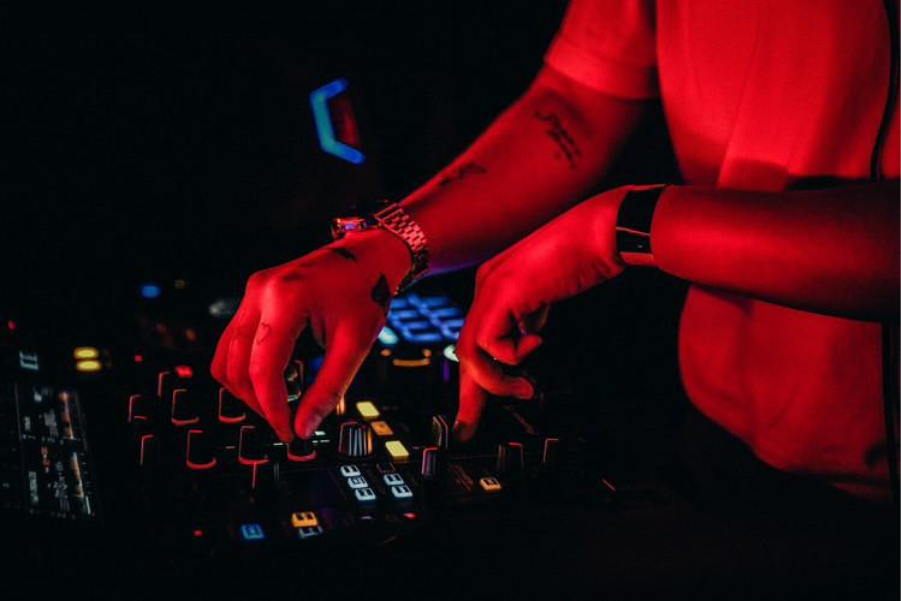
For my last two years in Exeter, I have been running events across the city. In 2025, I noticed a sudden shift in the dynamic of how events are unfolding. A shift that has made me think back to happenings across the country over the last year.
Numerous high-profile clubs have been shutting down. Motion, an iconic symbol of Bristol’s artistic rhythms, shut down after decades of service to the music industry. Printworks, a club which featured in films such as Batman (2016), also closed its doors to the yearning London music scene.
Numerous high-profile clubs have been shutting down. Motion, an iconic symbol of Bristol’s artistic rhythms, shut down after decades of service to the music industry.
Amongst the noise of slamming doors and corporate buyouts, a club closer to my heart has also left the scene. Corsica Studios, which I had the opportunity to DJ at last year, was a bustling small club. It had an incredible atmosphere, which everyone fell in love with. Fred Again named it his favourite club in London. Despite the joy, it too must leave the musical landscape of London later this year.
So, something must be changing on a large scale that is forcing the doors shut of all these fantastic venues. Something incredibly recent, perhaps. Whilst DJing at an event in Exeter, I noticed something fundamentally different:
People were not dancing.
I thought maybe they don’t like my music. So, I switched it up to some classic crowd pleasers, which I use as my emergency dance music… still no effect. Instead, all before me was a sea of people glued to their phones. Watching the night through a lens and a digital window. Assessing what dance moves would be appropriate, were it to be caught on Instagram or fixed to a screen so they could inform the digital world what event they were attending, removing themselves from true social interaction.
As someone who only started DJing after COVID, this is not out of the ordinary. However, it is something that has increased in the last year. To explore this new type of nightlife, I contacted someone with whom I have worked closely in the past.
I wanted to explore what nightlife used to mean to people and where the foundations of the UK clubbing scene lie. To understand this properly will set us in better stead to understand the shift that is happening today. This is when I contacted Aaron Hornibrook, who runs a festival which will be very well known to any Exeter student or alumni… Hijacked.
‘We’re unique, we are a tiny island, but we are responsible for so much of the music that you hear around the world, ’ says Aaron (who started Hijacked festival in 2014 and has been involved with the student music scene in Exeter since 1995). We discussed how Drum and Bass was started in the UK and has now become a ‘global force’, and the significance of ‘house music and acid house that happened in the late 80s and 90s. It is undeniable that the UK’s underground music scene has had a profound effect on music globally. So why is it that today we are seeing the same venues that brought us the ground-breaking scene for such genres disappear?
‘We live in challenging times… people’s disposable incomes are decreasing. That’s why we’re seeing more clubs close because people are having to make more difficult choices.’ This should not come as a surprise; however, it does not explain to me the sudden change of atmosphere. Surely, if music events are increasingly becoming a luxury, spirits would be higher for those attending.
We live in challenging times… people’s disposable incomes are decreasing. That’s why we’re seeing more clubs close because people are having to make more difficult choices
Aaron Hornibrok
For me, music has always had a sense of escapism to it. To attend a music event, and especially to DJ at one, is an opportunity to let go of everyday life. This is something that Aaron strongly agreed with. ‘It’s an escape from the mundanity of everyday life. It’s important that people work hard, but it’s also important that they go out and actually throw these shackles off.’
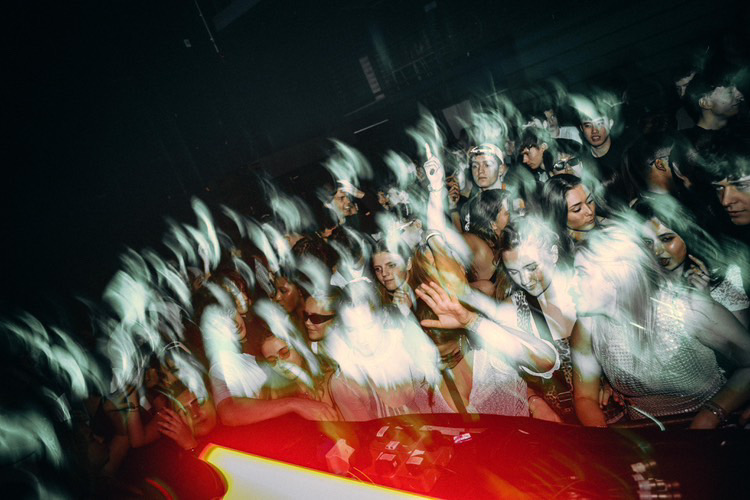
So what has changed? Why is it that a club room can now feel less like you’re letting go? The reason has become clear to me after my conversation with Aaron. ‘When I was first clubbing, or behind the decks, people didn’t have their phones, and they weren’t trying to capture every magic moment’. As a DJ, I can notice this pressure when I look around, and a hundred phone cameras are pointed at my face. However, I notice this more when I am on the dancefloor. The nervous thoughts that bite in the back of every dancefloor-lover’s head – is this a silly move? Is it about to end up on Instagram? Nagging thoughts that a lot of my own friends, I’m sure, could empathise with me about.
Aaron has talked to me a lot about what Exeter nightlife used to be like before COVID hit. How the events companies in Exeter had to start again from scratch. So, I asked him if he’d noticed that more people go on their phones on a night out, after the pandemic. ‘I think it’s increased since COVID… people spent a lot more time alone with their phones’. This would explain why the dynamic has suddenly shifted. With the current intake of university students, they are far more accustomed to the increase in social media consumption since COVID-19.
The shift on the dancefloor and the closing of club doors can seemingly be attributed not just to increasing costs. The importance of the UK’s nightlife does not falter, and the escapism that it offers, but we are at risk of taking away what was so special about it. The encroachment of social media onto the dancefloor (especially since COVID) comes at a cost to the clubgoer. Where people can no longer lose themselves in the night, as we are hounded by camera lenses and digital screens, we are at risk of losing the escapism that music can offer us.

The shift on the dancefloor and the closing of club doors can seemingly be attributed not just to increasing costs. The importance of the UK’s nightlife does not falter, and the escapism that it offers, but we are at risk of taking away what was so special about it.
I don’t want to leave this article in doom and gloom. I would instead like to propose a possible vision of what nightlife could look like. We should not understate the value of having a uniquely student-based nightlife. Aaron seems to not only understand this importance but also cherishes it. ‘I get to work with the most wonderfully emotionally intelligent people’ (referring to the student community), ‘I’m not just doing this because it makes me a living, it feeds my soul’.
At such a pivotal moment in our lives, the connections that we can make with one another are invaluable. Personally, the connections and friendships I have formed through music and nightlife in Exeter have been the most important and strongest connections I have ever made. This importance is evidently not lost on Aaron. As an organiser of some of the biggest student events, he ensures cooperation with student-led brands. Brands like Redemption, Sync or Swim, and Momentum (just to name a few), which are directly run by students, for students, place these values at their core. I hope that in Exeter, we can notice the importance of having brands directly run by our peers. To support these brands is to share and nourish a space where we can all connect and grow with each other, through the power of music.
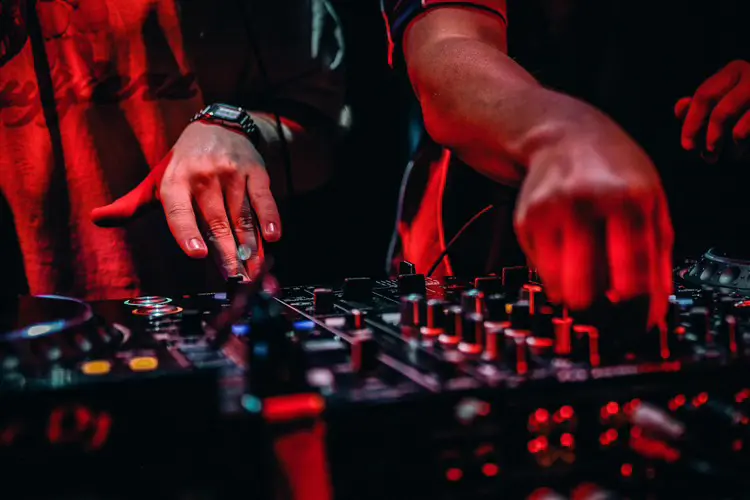
All this considered, the importance of distancing social media from the dance floor is evident. We must separate ourselves from being locked to our screens, to truly be able to lose ourselves in the night and in music. To make these connections, which is what student life is all about, we must be present in the shared experience of music, put our phones in our pockets, and enjoy a great night out.
All this considered, the importance of distancing social media from the dance floor is evident. We must separate ourselves from being locked to our screens, to truly be able to lose ourselves in the night and in music.
Aaron runs student events across the year, in partnership with multiple student-led brands. I would thoroughly recommend checking their Instagram for updates on upcoming events: @hijackedfestival @we_hijacked
