


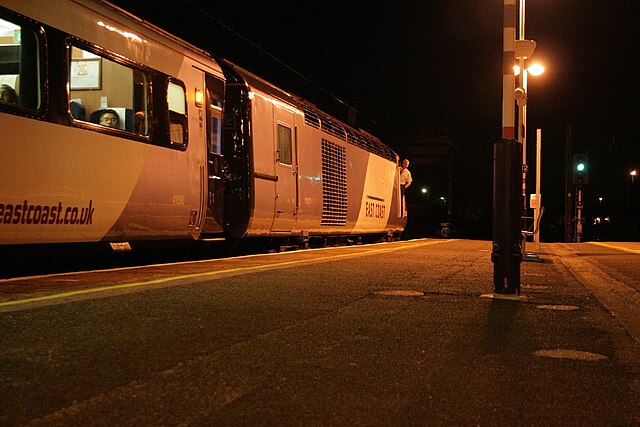
“Your train has been delayed” Picture this: you’re running for the train, and after just getting to the station, these are the words you hear. This is the reality for an ever-increasing group of students, collectively called commuters. These are individuals who live at home and travel to university.
There has been a significant increase in the number of students commuting to university. Financial education website, Blackbullion, conducted a survey which revealed that 46% of 1200 students commute. This can be attributed to increasing living costs, particularly the price of student accommodation. Taken in combination with student finance not always covering the cost of living, particularly for those who do not receive any additional financial support from parents. Consequently, the number of commuter students is increasing.
In terms of the differences in the cost of living at home and living in student accommodation are substantial. For Michaela Makusha, rent in Leicester would have cost on average £504 a month, whereas her commute cost £192 a month.
Upon deciding to commute, there are additional barriers that students also face. Makusha, described the main barrier as being the “unreliability of public transport”, explaining that she has to navigate several connecting trains just to get home from university.
Transportation barriers can be detrimental to the student experience. In particular, missing out on the social side of university. For example, Alice, a student from the University of Cardiff, compared her experience to being on the “outer peripheries” of the student community due to being too far away to travel home after events. This can make it difficult to engage in student societies that host events in the evening. Particularly for students who have low office hours. Furthermore, another student, Daman Arora, emphasised how much easier it is to make friends living on campus, due to the ability to be spontaneous. In addition, it may be getting increasingly hard to make friends on campus anyway, regardless of whether students are commuting. In fact, in a survey by UPP, 44% of students surveyed participate less in societies than they anticipated they would. This may point towards a decline in society participation generally, with 25% never having engaged in a society at all. This could reflect the growing number of commuter students finding it hard to go to societies; therefore, they do not go, shrinking society numbers. It’s a catch-22 situation.
However, perhaps commuters can turn these barriers into “unique opportunities.” Jaheim Karim was able to maintain his relationships with friends in his hometown whilst making new connections at university. This has been reinforced by Makusha, who said that commuting did not impact her social life and that she prefers living away from university.
In terms of educational experience, commuter students arguably have a poorer experience. Whilst this has improved recently due to better technology developments, particularly following the Covid-19 pandemic, it has allowed for better access to resources. There is still less engagement by commuters with in-person learning activities, and they may feel isolated from their learning community. As a result, commuters are more likely to have lower graduate outcomes than non-commuters.
Ultimately, should universities be doing more to support commuter students? Vivi Friedgut, chief executive of Blackbullion, said commuter students are at increased risk of dropping out due to financial strain. To resolve this, she suggests that universities utilise bonds with local industries by offering discounted safe travel and university-friendly employment. George Caulton approached the Times Higher Education top 25 UK universities; however, he was met with no response regardinghow the issues are being resolved. Furthermore, just simple things can help commuters feel involved. Postgraduate Natalie said that even a simple check in email would make her feel part of the university community.
