


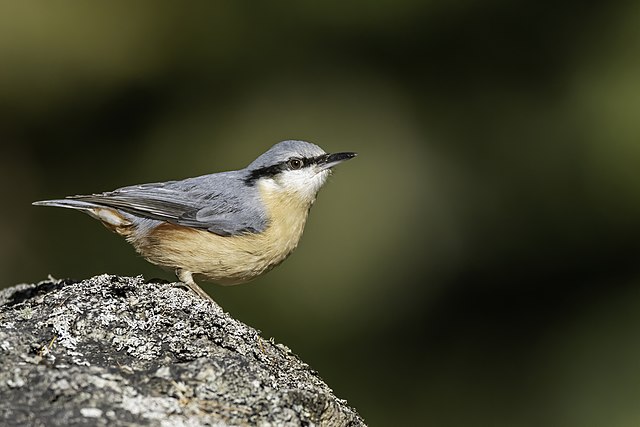
With a grey-blue back, chestnut-orange belly, a striking black eyestripe, and the overall impression of a miniature woodpecker, the Nuthatch (Sitta Europaea) would be one of the UK’s most delightful birds based on looks alone. Astonishingly, however, they display a unique range of behaviour that makes them an even greater pleasure to encounter.
The word Nuthatch comes from the Middle English, ‘nuthak’, meaning nut hacker, referring to their habit of hammering nuts into the crevices of tree bark to save for later. Nuthatches are often found lurking at the tops of trees where they pursue their diet of insects in the summer, while seeds and nuts are favoured in the winter. What makes them so distinct and enjoyable to watch is that they are the only bird in the UK that can climb down trees headfirst. Winter is therefore one of the best times to see Nuthatches as you can gain unobstructed views of them spiralling up and down tree trunks. If you are particularly lucky, the colder months can also cause Nuthatches to seek extra food on garden bird feeders. In leafier times, it can be trickier to secure a clear sighting, but their piercing call of loud whistles will let you know if they are about.
They are the only bird in the UK that can climb down trees headfirst.
Nuthatches also employ unique nesting techniques as they use mud to narrow the entrance hole to their nests, be it in a tree cavity or nest box, to prevent predators from entering. Sometimes they’re so zealous that they can even impede their own entry! Nuthatches lay around six to eight eggs and are notably sedentary, meaning that once a young Nuthatch has found a territory of their own, they tend to stay in that area for the rest of their life. This also makes them particularly territorial, often acting aggressively towards other Nuthatches to protect their sources of food.
Fortunately, Nuthatches are a Green Listed species, having increased by 291% since 1967. In the south of England and Wales in particular, you therefore have a good chance of seeing one if you head into a deciduous or mixed woodland, although milder winters have allowed them to push into southern Scotland in recent decades. When searching for Nuthatches, be sure to check the branches and trunks of trees. If you spot one you can enjoy watching them climb about for a surprisingly long amount of time, if you can keep track of their movements.