


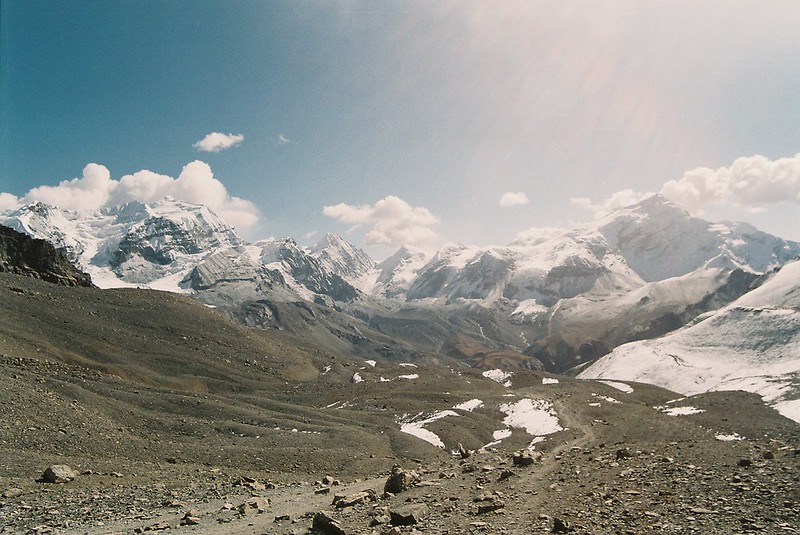
At the end of August, an extraordinary natural disaster struck between Nepal and Tibet, leading to around 300 people to lose the lives, with over 1000 people still missing and the death toll predicted to significantly rise.
The disaster began around 5000 meters above sea level, after a glacier collapsed on Everest. Satellite analysis in the following days showed that this was caused by the breakdown of bedrock under the glacier. Triggering a seismic event of a 5.2 magnitude – early reports falsely believed the event to be the result of an earthquake. The explosion of the collapse triggered a landslide of snow, rock and mud, which travelled a further 1km into the valley below, hitting the Lhende River in Tibet. Debris built up in the valley, creating a natural dam, which eventually fell under such pressure, leading to subsequent flash floods and mudslides which have laid villages, houses and roads to ruin. Satellite images have already revealed a significant change to the landscape.
Climate change cannot be ignored when investigating this event. Everest is found in the Himalayas, a region warming twice as fast as the global average, putting nearby states such as Nepal and Tibet at significant risk of landslides and floods. The high altitude of this mountainous region is what makes it especially vulnerable to global warming. In 2023, the UN stated that the region had lost around 1/3 of their ice in 30 years as a result of this.
In 2023, the UN stated that the region had lost around 1/3 of their ice in 30 years as a result of this.
Thousands of Nepalese soldiers and rescue teams have been deployed, as well as further personnel sent to assist by the UN. However, the extreme devastation has created an insurmountable physical barrier, which has made the task of rescuing is near impossible. Furthermore, the collapse caught officials completely off guard, as with no rain in sight they had not anticipated the floods, meaning there is a lot of organisation to catch up on. Waves of international support have come through, with tonnes of emergency supplies being sent by India, and the International Federation of Red Cross, the UN and Australia offering millions in emergency funding.
To make matters worse, for both victims and governments struggling to deal with this disaster, AI-generated videos have been released, which complicate the disaster’s aftermath on social media by spreading unnecessary and inconsiderate misinformation. Filled with visual anomalies, these videos show a dam which was supposedly collapsed to be intact, and people observing the disaster. Videos such as these whilst presenting difficulties for organisations trying to rescue people, also create further distress for people involved, giving them added anxieties at the most difficult point of their lives.
