


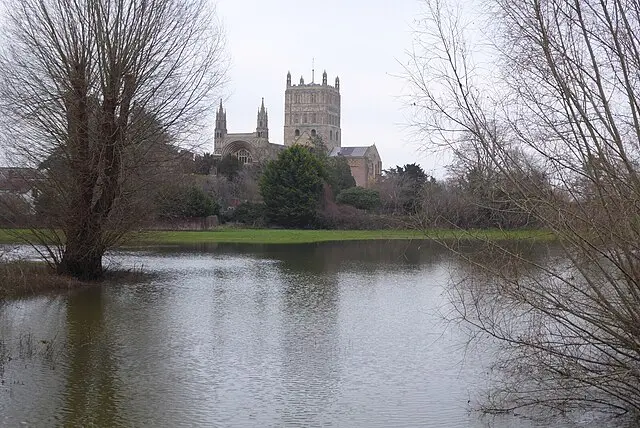
It’s not exactly news to acknowledge the frankly gloomy weather we’ve been experiencing recently. Continuous rain over the past couple of weeks has undoubtedly been affecting students overall. However, this downpour had far more impact than soggy walks to lectures.
After it rained for every day of 2026 in south-west England and south Wales, with over 50% more rainfall than usual in these areas, the weather became less inconvenient and more dangerous regarding climate concerns. On a conservation level the deluge has been threatening nesting habitats, insects, and the wildflowers benefitting our wildlife.
It rained for every day of 2026 in south-west England and south Wales, with over 50% more rainfall than usual in these areas
There is no mystery or shock here; we are seeing the direct effects of climate change in our everyday lives. With the last 3 years being the hottest on record, it’s only natural for the rainfall to have increased accordingly. To put it simply the warm air holds more water vapour and hence we see greater downpours. The most troubling part of this is how these effects are not following the timeline experts once imagined, and are in fact 20 years ahead of predictions. The climate crisis is hitting us much faster than we had imagined it would.
The most troubling part of this is how these effects are … 20 years ahead of predictions.
Consider this in conjunction with the alarming statistic that in the past 100 years, 90% of the UK’s wetlands have been lost. Wetlands are an integral natural combatant to flooding, storing excess water and filtering it at a slower rate. They are also incredibly biodiverse and can increase the quality of water through the removal of harmful substances. The loss of natural systems of flood management such as this can be seen as one of the main hinderances to our current flooding solutions. Environmentalists emphasise the necessity of natural defences in combating the storm fallout, citing the approach of urban areas such as Berlin, Germany in utilising green spaces to slow down the movement of rainwater. This is all before mentioning the residents of our natural environment who help combat the damage, such as beavers.
Our natural landscape is a bountiful resource in offsetting a lot of the problems we experience as a result of climate change, but as these areas continue to be desecrated in urban environments rather than integrated, we lose our ecological defences. Human efforts can only go so far, and are often long-winded, expensive, and sometimes counterproductive to environmental efforts. The earth can be our greatest ally, if we give it space to breathe. Stay warm and dry out there, but don’t stop talking about it. One of the best things we can do as students is continue to draw attention to the climate crisis.
